Every business has a story to tell. It could be a new product, an important partnership, an expansion into a new city, an award or a milestone worth marking. But having a story is one thing. Getting the right people to hear it, and believe it, is another.
That is where a press release comes in. A press release is a short, factual news story about your business, written in the style of a news report and sent to newspapers and online news sites for publication. Unlike a social media post or an advert, it reaches people through a publication they already know and trust.
In short, a press release helps your business build credibility, reach new audiences, show up when people search for you online and keep a lasting public record of your progress. It works best when the story is genuinely newsworthy, written as news rather than promotion, and placed in publications your customers actually read.
As the Media and PR Lead at Evaluate Media, I work on press releases for businesses across real estate, finance, technology, legal services and other sectors, and I see every week what gets published, what gets rejected and what actually makes a difference. This article shares what we have learnt.
Why Your Business Should Publish Press Releases
It builds credibility and trust
When customers, investors or partners search for your business, what they find shapes their opinion of you. A company that has been covered in recognised newspapers and news sites looks more established than one with no public record at all. In Nigeria, where many buyers want reassurance before they part with money, a story in a respected national paper can do a lot to settle doubts.
It reaches people beyond your own followers
Social media mostly reaches people who already follow you. A press release placed in the right publications puts your business in front of readers who may never have heard of you, including decision makers, investors and journalists who might want to cover you again later.
It helps people find you online
News stories published online can appear in search results when people look for your business, your industry or the topic of your announcement. Many news sites mark their outbound links in a way that passes little direct ranking value to your website, so do not expect a press release alone to lift your search rankings. The real benefit is that your business appears in trusted places when people search, which supports your wider search strategy.
It creates a lasting record and opens doors
An advert disappears when the campaign ends. A published news story can stay online for years, building a public history of your launches, milestones and achievements. That record is useful in tenders, investor conversations and partnership talks, and a well-placed announcement can lead to new enquiries, partnerships and further media interest.
What Makes A Story Worth Publishing
Not every business update is news. A press release works best when it tells readers something timely, significant or useful. Good examples include a new product or service, a strategic partnership, expansion into a new market, a new development or project, an award, a significant milestone, a new senior appointment, or an initiative that addresses a real problem in the community or the industry.
The test is simple: would someone outside your company care? If the only message is “we are great, buy from us”, it is an advert, not news. If it tells readers something new about a market, a problem or a change that affects them, it is a story.
How To Write A Press Release Editors Will Publish
Editors receive far more releases than they can use, and the ones that read like adverts are often rejected or heavily rewritten. A release that reads like a real news report has a much better chance of running close to how you sent it.
Start with a plain, direct headline that says who did what, with a specific outcome, for example “Developer launches 120-home estate in Mowe to meet rising housing demand”. Avoid hype words such as “best”, “leading”, “premier” or “world-class”. Some papers prefer the headline to lead with the wider issue or trend rather than the company name, so be ready for an editor to adjust it.
The first paragraph should carry the news on its own: who, what, where, when and, ideally, a concrete number. A reader who stops after one paragraph should still know what happened. The following paragraphs add detail, then quotes, then wider context, with background about the company at the end. This structure, with the most important information first, is how journalists write, and it makes an editor’s job easier.
Use two to four quotes from named people with their full job titles. A strong quote explains why the announcement matters or what happens next, rather than repeating the facts. Keep sales language, such as promotional prices, deadlines or “limited offer”, out of the reporting voice. If a claim must be included, put it inside a quote from a company representative.
Adding real context lifts a release from promotion to news. A property announcement becomes far stronger with a credible figure on the housing shortage, and a fintech launch with a relevant fact about the payments market. An independent voice, such as an industry expert, adds weight too.
Keep it to roughly 400 to 700 words in short paragraphs, end with what happens next rather than a sales call to action, and include a short “About the company” section with accurate contact details. Always send a good, high-resolution photo with the release. Editors ask for one, and a poor image weakens even a strong story.
Getting Your Press Release Published In Nigeria
Writing the release is only half the job. Where and how it is placed decides who actually reads it.
Choose publications by audience, not by size alone. A financial services announcement belongs in a business title such as BusinessDay or ThisDay, where investors and executives read. A housing or community story may suit a general newspaper such as The Guardian, Vanguard or Punch. Specialist industry websites can be valuable too, because their readers are exactly the people you want to reach.
Tailor the angle for each publication. The facts stay the same, but the part of the story that leads can change. A business paper may want the investment and market angle, while a general paper may want the impact on people and communities. Sending the identical release everywhere is one of the main reasons announcements get ignored.
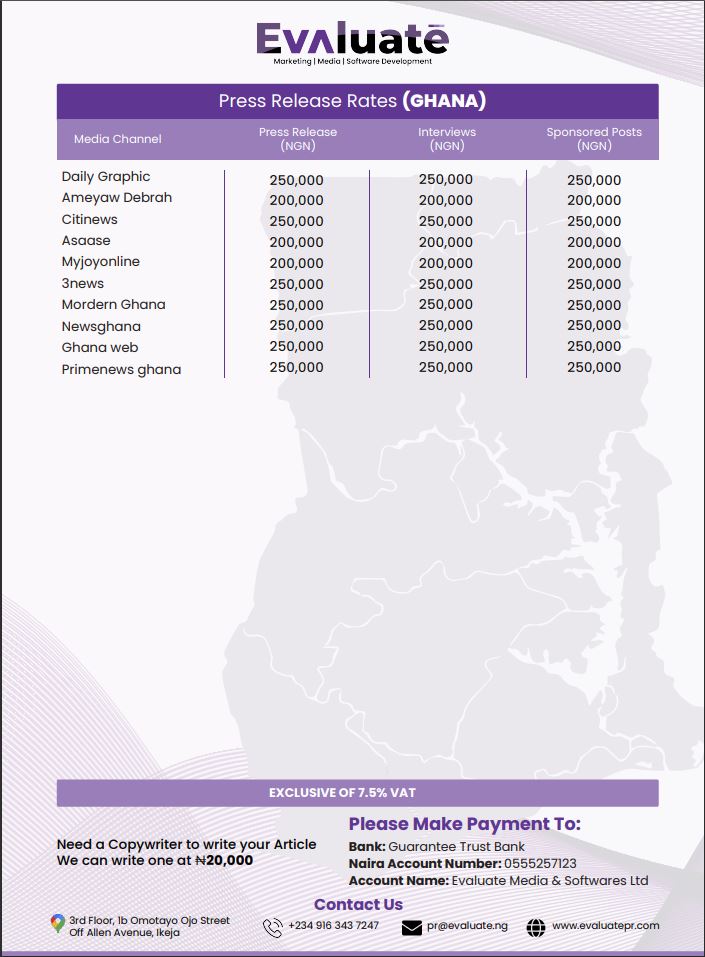
It also helps to understand how placements work here. In Nigeria, many corporate press releases in national newspapers and their websites are published as paid placements. Payment does not remove editorial judgement, though. Editors still decide whether a release reads as news, may rewrite headlines into plainer news language, and can turn down a release that is purely promotional. A well-written, genuinely newsworthy release gets better treatment and is more likely to attract free coverage later.
Timing varies by publication. Some online placements go live within a day or two of approval, while print and more selective outlets take longer. Plan major announcements in advance, especially around busy news periods.
Common press release mistakes to avoid
The most common mistake is writing an advert and calling it a press release. Others include burying the news in the third paragraph, using a vague headline, quoting someone without their full title, sending no photo or a poor one, including prices and sales offers in the story, getting names or figures wrong, and sending one generic version to every publication. Each of these lowers the chance that your story runs as you intended, or runs at all.
The bottom line
A press release is an investment in your business’s visibility, credibility and long-term reputation. It helps you share important news, build a stronger presence online and reach audiences far beyond your own network.
The key is to have a story worth telling, write it as news rather than promotion, and place it in publications your audience trusts. Done well, a single release can keep working for your business long after the day it is published.
At Evaluate Media, we write and place press releases in leading Nigerian newspapers and online news platforms for businesses in real estate, finance, technology, legal services and other sectors.
Frequently asked questions about press releases
What is a press release?
A press release is a short, factual news story about a business, written in the style of a news report and sent to newspapers and news websites for publication. It is used to announce launches, partnerships, milestones, awards and other important developments.
When should a business send out a press release?
When you have genuine news: a new product or service, a partnership, an expansion, a major project, an award, a senior appointment or a milestone. If the story would not interest anyone outside your company, it is better shared on your own channels.
Can a press release help my business appear on Google?
Yes. Published news stories can appear in search results for your business name and related topics, making you easier to find and more credible. They support a wider search strategy but are not a guaranteed way to improve your rankings.
Are press releases only for large companies?
No. Startups and small businesses often gain the most, because a story in a recognised publication gives them credibility that is otherwise hard to build quickly.
How long does it take for a press release to be published in Nigeria?
It depends on the publication. Some online placements go live within a day or two of approval, while print editions and more selective outlets can take longer. Working with an experienced PR team helps with writing, editor relationships and timing.
How long should a press release be?
Around 400 to 700 words is usually enough. Lead with the news, keep paragraphs short, include two to four quotes from named people and finish with a short paragraph about the company.
About The Author
Favour Enyosa is the Media and PR Lead at Evaluate Media, where she oversees media relations, press communications and publicity campaigns for the agency’s clients. She develops newsworthy press releases, coordinating media placements across leading Nigerian newspapers and digital news platforms, and ensures clients’ stories reach relevant audiences. She also manages executive profiling and personal public relations for C-suite executives and senior business leaders, helping them strengthen their public presence, establish industry credibility and build trusted professional reputations through strategic media engagement.